How to Make $120K a Year with an Army of AI Influencers (The Real Strategy Behind the Hype)

How to Make $120K a Year with an Army of AI Influencers (The Real Strategy Behind the Hype)
The headline promise is simple: build multiple AI influencers, automate content, stack monetization, and scale to six figures.
The reality?
It’s not about avatars. It’s about systems.
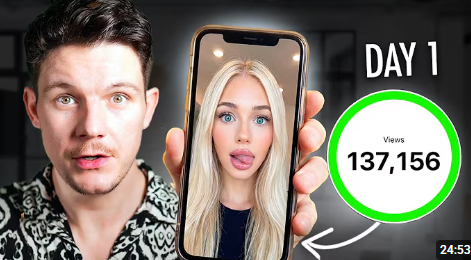
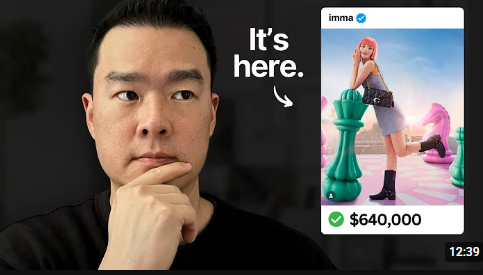
A recent strategy breakdown circulating on YouTube lays out the concept of earning $120K per year by deploying an “army” of AI influencers. Strip away the hype, and what you’re left with is something much more interesting:
A scalable, repeatable digital asset model.
This article walks through the real mechanics behind that idea — what works, what doesn’t, and how to build it like infrastructure instead of chasing views.
The Core Shift: From Personality to Portfolio
Traditional creator economy:
- One person
- One brand
- One growth bottleneck
AI influencer model:
- Multiple digital personas
- Multiple niche angles
- Multiple revenue streams
You stop thinking like a performer and start thinking like a media operator.
The difference is leverage.
Instead of building an audience around you, you build systems that generate attention assets.
Each AI influencer becomes:
- A distribution node
- A niche authority channel
- A monetizable funnel
You’re not trying to become famous.
You’re trying to build compounding digital properties.
Why This Model Works Right Now
Three structural forces make this viable:
1. Short-Form Content Rewards Volume
TikTok, Reels, and Shorts don’t require a celebrity — they require consistent publishing.
Algorithm math favors:
- Frequency
- Retention
- Watch time
AI drastically reduces the cost of content production.
More output → more data → more optimized content.
2. Tools Have Reached “Good Enough.”
You no longer need Pixar-level animation.
Today’s AI tools can:
- Generate scripts
- Clone voices
- Create stylized avatars
- Auto-edit vertical videos
The barrier to entry isn’t skill — it’s system design.
3. Audiences Care About Value, Not Biology
If the content is:
- Entertaining
- Informative
- Aspirational
Most viewers don’t care whether the “influencer” is human or synthetic.
Relevance beats authenticity theater.
The Financial Math Behind $120K
Let’s remove fantasy.
To hit $120K/year, you need $10K/month.
That could look like:
- 10 AI influencers earning $1,000/month each
- 5 influencers earning $2,000/month
- 20 earning $500/month
This is portfolio math.
And portfolio math reduces pressure.
Instead of “this account must blow up,” the mindset becomes:
“How many small, profitable media assets can I operate?”
This is closer to SaaS thinking than influencer thinking.
Step 1: Choose Niches That Already Spend Money
This is where most people sabotage themselves.
They pick aesthetics instead of economics.
A profitable niche has three traits:
- Clear problems
- Existing products or services
- Active affiliate ecosystems
Strong categories include:
- Fitness & fat loss
- Personal finance
- Relationships
- Self-improvement
- Luxury lifestyle
- Tech gadgets
- Beauty
Weak niches:
- Pure inspiration
- Abstract motivation
- Generic humor without a monetization tie-in
Before you build the avatar, validate the monetization path.
Ask:
- Are there affiliate programs?
- Are brands already sponsoring creators here?
- Are digital products selling in this space?
If money is already flowing, you’re building near a river.
Step 2: Design the Influencer Like a Product
Don’t just create “an AI girl” or “a finance guy.”
Define:
- Tone (serious, playful, luxury, edgy)
- Audience (teen fitness beginners? 30+ entrepreneurs?)
- Content angle (daily tips? myth-busting? stories?)
- Monetization alignment
Example:
AI Fitness Influencer
Audience: 25–35 men wanting aesthetic muscle
Angle: “Gym myth destroyer.”
Monetization: Supplements, workout programs, affiliate gear
The character exists to serve the business model.
Not the other way around.
Step 3: Build the Content Machine
This is where you win or fail.
A scalable AI influencer operation has a repeatable workflow:
- Script generation
- Hook optimization
- Voice synthesis
- Visual generation or stock footage pairing
- Auto captioning
- Batch scheduling
The key principle:
Batch everything.
Instead of making 1 video per day, produce 30 in one session.
Momentum compounds when friction is removed.
Step 4: Platform Strategy (Don’t Overthink It)
You don’t need to be everywhere.
Pick:
- 1 primary platform
- 1 secondary repurpose channel
Short-form is ideal because:
- Production cost is low
- Attention cycles are fast
- Testing speed is high
Early phase goal:
Volume > perfection.
Later phase goal:
Retention > volume.
Step 5: Monetization Stacking
This is where the real money lives.
Ad revenue alone is unreliable.
Instead, layer income sources:
1. Affiliate Marketing
Low friction.
High scalability.
Attach affiliate links in bio, Linktree, or pinned comments.
2. Digital Products
- Workout plans
- Finance spreadsheets
- Guides
- Templates
- AI prompts
Digital margins are near 100%.
3. Brand Deals
Once accounts hit traction:
- Sponsored posts
- Product placements
- Dedicated videos
AI influencers are attractive because they:
- Never miss deadlines
- Can produce content instantly
- Don’t require travel or scheduling
4. Lead Generation
Drive traffic to:
- Email lists
- Paid communities
- Coaching funnels
Attention is the asset.
Email is the control.
The Biggest Mistake: Launching 10 at Once
The “army” idea sounds exciting.
But beginners misinterpret scale.
Correct approach:
- Build one AI influencer.
- Prove it can generate consistent monthly revenue.
- Document the process.
- Clone the system into adjacent niches.
Scale systems, not experiments.
Risks and Realities
Let’s talk downside.
Platform Policy Risk
AI disclosure rules may evolve.
Solution:
Be transparent when needed. Build email lists for independence.
Saturation Risk
Low-effort AI spam will flood platforms.
Solution:
Compete on positioning and storytelling, not just automation.
Retention Risk
If content feels robotic, engagement dies.
Solution:
Human-level scripting still matters. AI assists; strategy leads.
Ethical Risk
Misleading audiences about real identity can backfire.
Solution:
Position AI influencers as stylized brands, not fake humans.
Long-Term Play: Media Infrastructure
The real opportunity isn’t one viral AI influencer.
It’s building a media micro-network.
Imagine:
- 5 niche accounts
- Each pushing traffic into segmented email lists
- Each sells tailored digital offers
You now own:
- Distribution
- Audience data
- Monetization pathways
That’s not influencer income.
That’s media equity.
A Smarter Builder’s Approach
If you’re serious about making this work:
Start lean.
Month 1:
- Build 1 account
- Publish 30 videos
- Optimize hooks
Month 2:
- Introduce affiliate links
- Test digital mini-offer
Month 3:
- Scale posting frequency
- Launch email capture
Month 4:
- Duplicate system into adjacent niche
This is iterative scaling.
Not fantasy scaling.
The Real Insight Behind the $120K Claim
The number isn’t magic.
The leverage is.
AI reduces the cost of:
- Production
- Iteration
- Scaling
If you treat AI influencers as automated attention engines — instead of novelty avatars — the business model becomes logical.
Create attention.
Convert attention.
Replicate the system.
Six figures become a function of multiplication.
And multiplication is controllable.
Final Take
The AI influencer “army” strategy isn’t about replacing humans.
It’s about replacing bottlenecks.
When you stop thinking like a creator and start thinking like an operator, everything changes.
Each AI persona becomes a small, programmable media business.
Build one correctly.
Clone it intelligently.
Stack monetization carefully.
That’s how $120K/year moves from headline to spreadsheet.
If you want next-level depth, I can map this into:
- A full execution blueprint
- A niche selection validation framework
- Or a monetization funnel diagram tailored to your AI influencer site
Let’s build it like infrastructure.



Post Comment